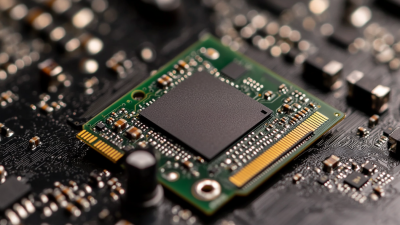
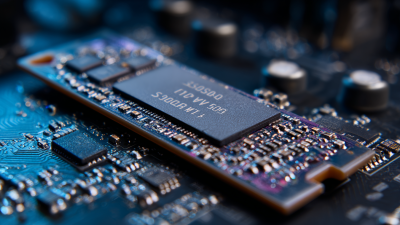
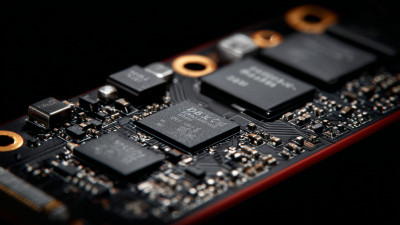
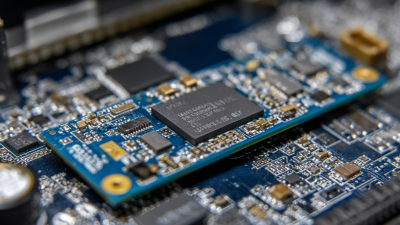
Hey, in today's super busy digital world, finding reliable and speedy storage options is more important than ever. As apps get more complex and files keep growing, a lot of folks are thinking about upgrading to an M.2 Ssd Drive. Honestly, these drives are a game-changer—way faster and more dependable than old-school hard drives. They let you access your data in the blink of an eye and cut down load times, making your whole computing experience way smoother and more enjoyable.
What makes the M.2 Ssd So special? Well, it’s their sleek design and incredible speed. They're perfect for everyone—from casual browsers and gamers who want quick game loads, to creative pros juggling huge files, or just anyone looking to make their daily computing a lot easier. Plus, their compact size means they fit easily into modern laptops and desktops without taking up too much space, so they’re a no-brainer for upgrading your system’s performance.
All in all, switching to an M.2 SSD isn’t just about bumping up specs. It’s about truly transforming how you use your device. Once you make the jump, tasks that used to take minutes become instant, and your whole experience feels more responsive and satisfying. Trust me, it’s a move that really unlocks your device’s full potential.

Understanding the Basics of M2 SSD Drives and Their Technology
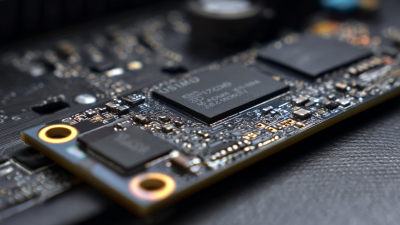
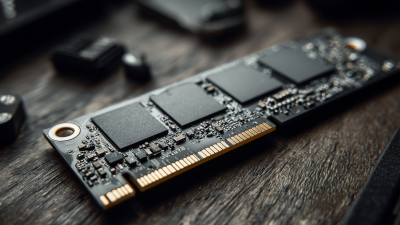
M.2 SSD drives represent a significant advancement in storage technology, offering faster data transfer rates and improved efficiency compared to traditional hard drives or SATA SSDs. They connect directly to the motherboard, allowing for a more compact design and reducing latency. M.2 drives can leverage the NVMe protocol, which enhances read and write speeds substantially. This technology is ideal for demanding applications, such as gaming and video editing, where quicker data access can lead to smoother performance and reduced loading times.
When considering an M.2 SSD, it's essential to verify compatibility with your motherboard, as not all systems support M.2 drives. Look for the keying structure of the slot, the length of the SSD, and whether it supports NVMe or only SATA. These aspects will determine the potential performance gains and ensure that you choose the right drive for your setup.
**Tips:** Before installation, back up your data to avoid any loss during the upgrade. Also, consider the amount of storage you need; M.2 SSDs come in various capacities, so it’s wise to choose one that accommodates your usage patterns while leaving room for future expansion. Lastly, keep an eye on heat management, as high-performance drives can run hot, necessitating proper cooling solutions to maintain optimal functionality.
Performance Comparison: M.2 SSD vs. SATA SSD
Comparing M2 SSD Drives with Traditional Storage Solutions
When comparing M2 SSD drives with traditional storage solutions, the differences in performance and efficiency become strikingly evident. M2 SSD drives utilize the NVMe interface, which significantly amplifies data transfer speeds compared to older SATA-based SSDs and traditional Hard Disk Drives (HDDs). This increase in speed translates to quicker boot times, faster application launches, and improved overall system responsiveness. For gamers and professionals working with large files or applications, the benefits of an M2 SSD can drastically reduce waiting times and enhance productivity.
Tips: To fully utilize the benefits of an M2 SSD, ensure compatibility with your motherboard, as not all systems support M2 slots. Additionally, consider using the drive for your operating system and frequently used applications to experience the maximum performance boost. Implementing adequate cooling solutions for your M2 drive can also prolong its lifespan and maintain optimal performance under heavy workloads.
Moreover, M2 SSDs generally offer a higher data density and efficiency, meaning they occupy less physical space while providing substantial storage capacity. This is especially advantageous in compact systems like laptops and ultrabooks, where space is at a premium. Traditional solutions often fall short in scalability and speed, making it clear that M2 SSD technology is a forward-thinking choice for anyone looking to upgrade their storage experience significantly.
Tips: Regularly back up data stored on an M2 SSD to avoid loss, as the speed benefits might lead to a heavier reliance on this advanced technology. Explore options for managing your storage effectively, such as utilizing cloud services in conjunction to enhance access and redundancy.
Why You Need an M2 SSD Drive for Faster Performance and Improved Storage
| Feature | M2 SSD Drive | Traditional HDD |
| Read Speed | Up to 7000 MB/s | Up to 160 MB/s |
| Write Speed | Up to 5000 MB/s | Up to 140 MB/s |
| Latency | | 5-10 ms |
| Form Factor | Compact (M.2 2280) | 5.25-inch |
| Shock Resistance | Highly resistant | Sensitive to shocks |
| Energy Consumption | Low | Higher |
| Typical Uses | Gaming, Video Editing, Data Analytics | Basic Storage, Backup |
Key Advantages of Using M2 SSD Drives for Performance Enhancement
M2 SSD drives have become an essential component for anyone seeking to significantly boost performance and improve storage capacity in their devices. The key advantages of these drives stem from their advanced technology, which allows for faster data transfer rates compared to traditional HDDs and even SATA SSDs. According to a report from the International Data Corporation (IDC), M2 SSDs can achieve read speeds of up to 7,000 MB/s, whereas SATA SSDs typically max out around 550 MB/s. This dramatic difference in speed means tasks such as game loading, file transfers, and system boot times are noticeably improved, fostering a more efficient workflow.
Moreover, the compact design of M2 SSDs not only saves physical space within devices but contributes to better thermal management. The latest thermal throttling report from TechInsights indicates that M2 drives can operate more efficiently under load, maintaining performance without overheating, which is critical in high-performance computing environments. This efficient thermal management is further supported by their low power consumption, helping to extend battery life in laptops and gaming devices. Given these advantages, upgrading to an M2 SSD is an essential step for individuals and enterprises alike looking to enhance reliability, speed, and overall performance in their daily operations.
Ideal Use Cases for M2 SSD Drives in Modern Computing
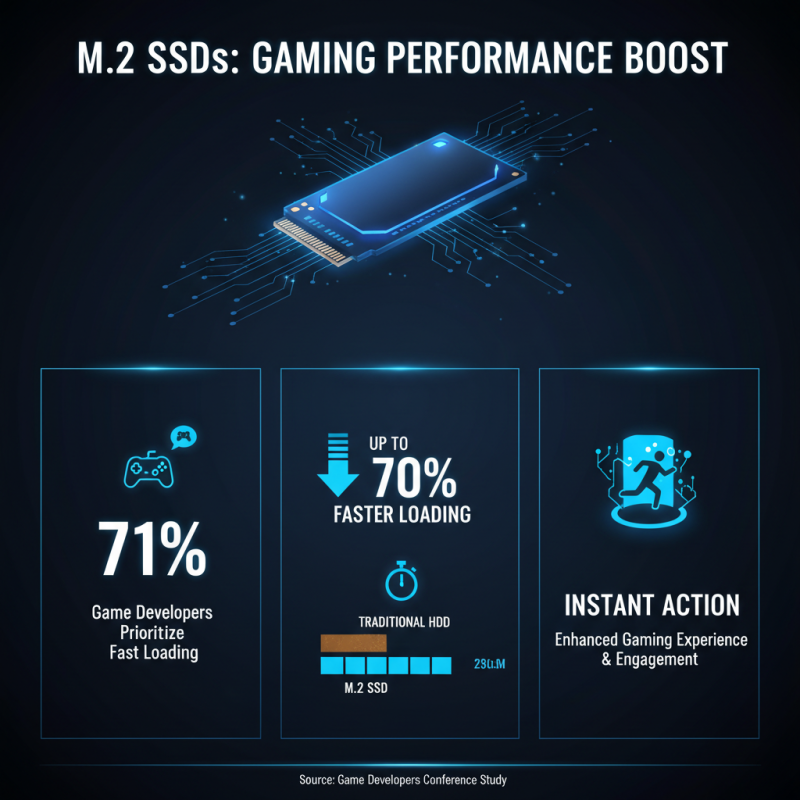
M.2 SSD drives have become increasingly vital in modern computing, catering to a variety of use cases that demand both speed and efficiency. One of the most common applications is in gaming, where loading times can significantly impact the overall experience. According to a study by the Game Developers Conference, 71% of developers prioritize fast loading times, and the adoption of M.2 SSDs can reduce these times by up to 70% compared to traditional hard drives. This allows gamers to plunge into action almost instantly, ultimately enhancing user satisfaction and engagement.
Another notable application is in data-intensive fields such as video editing and 3D rendering. A report from the International Data Corporation emphasizes that creative professionals frequently experience bottlenecks when transferring large files using conventional storage. M.2 SSDs can deliver sequential read and write speeds that reach upwards of 3500 MB/s, enabling seamless playback and editing of high-definition 4K and 8K videos. This not only streamlines workflows but also reduces the time required to render complex projects, making M.2 SSDs an essential tool in a digital creator's arsenal.
Furthermore, M.2 SSDs are gaining traction in office environments where virtual machines and cloud computing are prevalent. The ability to rapidly access data and run multiple applications simultaneously improves overall productivity. A survey conducted by Gartner reveals that organizations utilizing SSD technology report a 20-30% increase in efficiency. As businesses adapt to the growing demand for remote work solutions, the integration of M.2 SSDs has become a strategic advantage for optimizing operational performance.
How to Install and Upgrade to an M2 SSD Drive
Upgrading to an M2 SSD drive can significantly boost your system's performance and storage capabilities. The M2 interface leverages NVMe technology, enabling faster data transfer rates compared to traditional SATA SSDs. According to industry reports, M2 SSDs can achieve read speeds of up to 7000 MB/s, which is nearly six times faster than SATA SSDs, which typically offer speeds around 600 MB/s. This performance enhancement translates directly to quicker boot times, faster application loading, and improved overall system responsiveness, making it an ideal choice for gamers, content creators, and power users alike.
Installing an M2 SSD drive is a straightforward process. First, ensure that your motherboard supports M2 connections and has an available M2 slot. Before installation, it’s crucial to back up your data to avoid any loss during the transition. Once prepared, power down your system and disconnect it from the power supply. Carefully insert the M2 SSD into the designated slot at an angle and secure it with a screw. After installation, power up your system and access the BIOS to configure the new drive. Finally, format the SSD through your operating system, and you’ll be ready to enjoy improved performance and additional storage capacity. Industry experts suggest that upgrading to an M2 SSD can lead to a noticeable increase in productivity, with a reported 30-50% enhancement in workload efficiency, underscoring the benefits of this upgrade for modern computing needs.
Future Trends in Storage Technology: The Role of M2 SSDs
 The role of M2 SSDs in future storage technology is increasingly significant as the demand for faster, more efficient data processing escalates. M2 SSDs offer high-speed data transfer rates compared to traditional storage solutions, enabling quicker boot times and reduced loading times for applications and games. This rapid performance is essential for modern computing needs, especially as more users embrace data-intensive activities such as video editing, gaming, and complex data analysis. The compact form factor of M2 SSDs also contributes to their effectiveness, allowing for streamlined designs in laptops and desktops without sacrificing storage capacity or speed.
As technology continues to evolve, the reliance on M2 SSDs will only grow. With advancements in interfaces and protocols, such as NVMe, the potential for even greater data throughput becomes a reality. This progress will play a crucial role in fields such as artificial intelligence and big data, where vast amounts of information need to be processed swiftly. Furthermore, as cloud computing becomes more prevalent, M2 SSDs will help bridge the gap between local and remote storage needs, ensuring that users can access and manipulate data seamlessly. The increasing integration of M2 SSDs in consumer electronics indicates a future where faster, more reliable storage is not just a luxury but a standard expectation for all users.
Cost Considerations When Choosing an M2 SSD Drive for Your Needs
When selecting an M2 SSD drive, cost considerations play a vital role in ensuring you get the best performance without overspending. Prices of M2 SSD drives can vary significantly based on factors such as storage capacity, read/write speeds, and brand reputation. It’s essential to balance your budget with your performance needs, as opting for a cheaper model may lead to slower speeds and reduced efficiency, ultimately affecting your overall user experience.
Tips: Always compare prices across various retailers to find the best deals. Look for sales events or discounts that can significantly lower the price of an M2 SSD. Additionally, pay attention to warranty offers, as a good warranty can add value and peace of mind to your purchase.
Moreover, consider future-proofing your investment. If you anticipate requiring more storage or speed down the road, opt for drives that offer higher capacities or faster transfer rates, even if they come at a premium price now. This foresight can save you money in the long run, as you won’t need to upgrade or replace your SSD as frequently.
Tips: Check online reviews and benchmarks before making a purchase. Understanding others' experiences with a particular model can guide you in selecting an SSD that meets both your performance and budget needs.
Evaluating Performance and Longevity: Insights from Industry Reports on 2.5-Inch SATA SSD Trends and Benefits
The evolution of storage technology has led to the emergence of 2.5-inch SATA SSDs, which deliver both impressive performance and longevity. According to various industry reports, these SSDs offer significant advantages over traditional hard drives, primarily due to their high-speed capabilities. With read and write speeds that far surpass those of HDDs, users can expect faster boot times and accelerated application performance, making them an ideal choice for both personal and professional use.
Moreover, the durability and reliability of 2.5-inch SATA SSDs contribute to their appeal. Built to withstand shocks and vibrations, these drives ensure that data remains safe even in demanding environments. With available storage capacities of up to 2TB, they cater to the needs of a wide range of users, from gamers seeking high storage for large games to professionals requiring efficient data management. The compact form factor makes them easy to integrate into various systems, further enhancing their usability.
As industries continue to highlight the benefits of 2.5-inch SATA SSDs, it's clear that upgrading to solid-state storage is a prudent investment for those looking to enhance their computing experience. The combination of speed, reliability, and efficiency positions these SSDs as a leading choice for modern storage solutions, paving the way for improved performance in everyday tasks.
FAQS
: M2 SSD drives utilize the NVMe interface, providing significantly faster data transfer speeds compared to older SATA-based SSDs and traditional Hard Disk Drives (HDDs), resulting in quicker boot times and improved system responsiveness.
The high speed of M2 SSDs drastically reduces waiting times when launching applications or accessing large files, enhancing productivity and overall experience for gamers and professionals.
To fully utilize an M2 SSD's benefits, ensure compatibility with your motherboard, use the drive for your operating system and frequently accessed applications, and implement adequate cooling solutions to maintain performance.
M2 SSDs have a higher data density and efficiency, meaning they occupy less physical space while providing substantial storage capacity, making them ideal for compact systems like laptops and ultrabooks.
Regularly back up data stored on an M2 SSD to avoid loss, as users may become heavily reliant on its speed and efficiency.
M2 SSDs are pivotal in future storage technology due to their high-speed data transfer rates and compact form factor, meeting the demands of modern computing needs, especially in data-intensive activities.
Advancements in interfaces and protocols like NVMe are expected to increase data throughput further, making M2 SSDs essential in fields such as artificial intelligence and big data.
M2 SSDs will help bridge local and remote storage needs by enabling seamless access and manipulation of data, as cloud computing becomes more prevalent.
The increasing use of M2 SSDs in consumer electronics signifies a future where faster and more reliable storage is expected as a standard feature, not just a luxury.
Conclusion
The article discusses the significance of M2 SSD drives in enhancing computing performance and storage capabilities. It begins by explaining the fundamental technology behind M2 SSD drives and how they differ from traditional storage solutions. The advantages of using M2 SSD drives, such as faster data transfer speeds and compact design, are highlighted, making them ideal for modern computing needs ranging from gaming to professional applications.
Furthermore, the article covers practical aspects, including installation tips for upgrading to an M2 SSD drive, which is crucial for users looking to optimize their systems. It also explores future trends in storage technology where M2 SSDs are expected to play a pivotal role, while addressing cost considerations to help individuals make informed decisions when selecting an M2 SSD drive that fits their requirements. Overall, M2 SSD drives represent a significant leap in storage technology, offering various benefits that cater to evolving demands in the tech landscape.